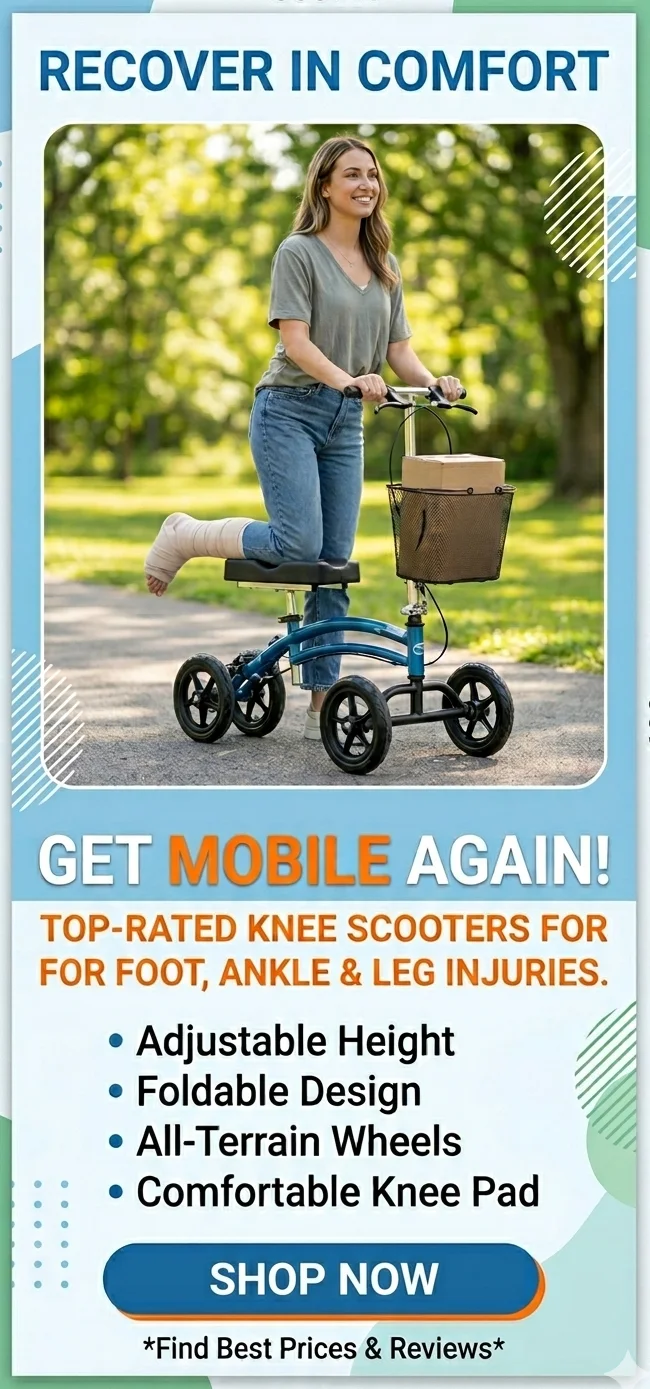
Need to stay mobile after a foot, ankle, or lower leg injury? A knee scooter can be a practical alternative to crutches for many people, offering better comfort, smoother movement, and more freedom around the house, at work, or while running errands. Read on to learn what a knee scooter is, who it helps, where it works best, and what to consider before buying one.
What is a knee scooter?
A knee scooter, also called a knee walker, is a medical mobility device designed for people recovering from injuries or surgery involving the foot, ankle, or lower leg. Instead of putting weight on the injured foot, you rest your bent knee on a padded platform while using your good leg to push forward. Most models include handlebars for steering, a braking system for control, and either three or four wheels for stability. Compared to traditional crutches, a knee scooter can feel more natural for day-to-day movement because it reduces upper-body strain and helps you move more smoothly over flat surfaces.
Who should use a knee scooter?
A medical knee scooter is often used by people recovering from a broken foot, ankle surgery, Achilles injuries, sprains, or other lower leg conditions that require limited or non-weight-bearing movement. For many users, it serves as either a replacement for crutches or a secondary mobility tool for times when crutches are less convenient. Whether a knee scooter is the right choice depends on your balance, strength, home layout, and your doctor’s recommendations.
What are the benefits of a knee scooter vs crutches?
One of the biggest reasons people look into a knee scooter is comfort. Crutches can be tiring on the hands, wrists, shoulders, and underarms, especially during longer recovery periods. A knee scooter may help reduce that fatigue while making everyday tasks easier, such as moving through the kitchen, going to work, shopping, or carrying light items. Many users also like that a knee scooter feels more stable on smooth indoor flooring and sidewalks, though it still requires careful use and attention to terrain.
Where can I use a knee scooter?
A knee scooter can be useful in many settings, especially indoors on flat, smooth surfaces like hardwood, tile, laminate, and low-pile carpet. It can also work well on paved sidewalks, driveways, and similar outdoor areas when conditions are even and dry. If you need something for travel, folding models are often easier to load into a car, store in a closet, or bring along for appointments. If you expect to spend more time outside on rough pavement, gravel, or lawn areas, an all-terrain design with larger wheels may be the better fit.
Is a knee scooter safe?
A knee scooter can be a safe and effective recovery aid when used properly, but it is not something to ride carelessly. Brakes, steering control, turning radius, and wheel size all matter. Users should move at a controlled pace, avoid sharp turns, stay alert on slopes or uneven surfaces, and follow the manufacturer’s setup instructions for handle height, knee pad height, and brake adjustment. Like any mobility aid, the right fit and proper technique make a major difference.
Is a knee scooter worth it?
For many people, yes. If you expect to spend weeks recovering and want a mobility option that feels easier than crutches for everyday use, a knee scooter can be worth considering. The best model for you depends on where you will use it most, how often you need to transport it, and whether you want a compact travel model or a larger all-terrain option. If you’re comparing features, weight capacity, foldability, wheel size, and brake quality are all worth a close look before buying.
Best Selling Knee Scooters
Browse popular knee scooter options on Amazon to compare features like foldability, wheel size, braking systems, and overall portability.
No products found.