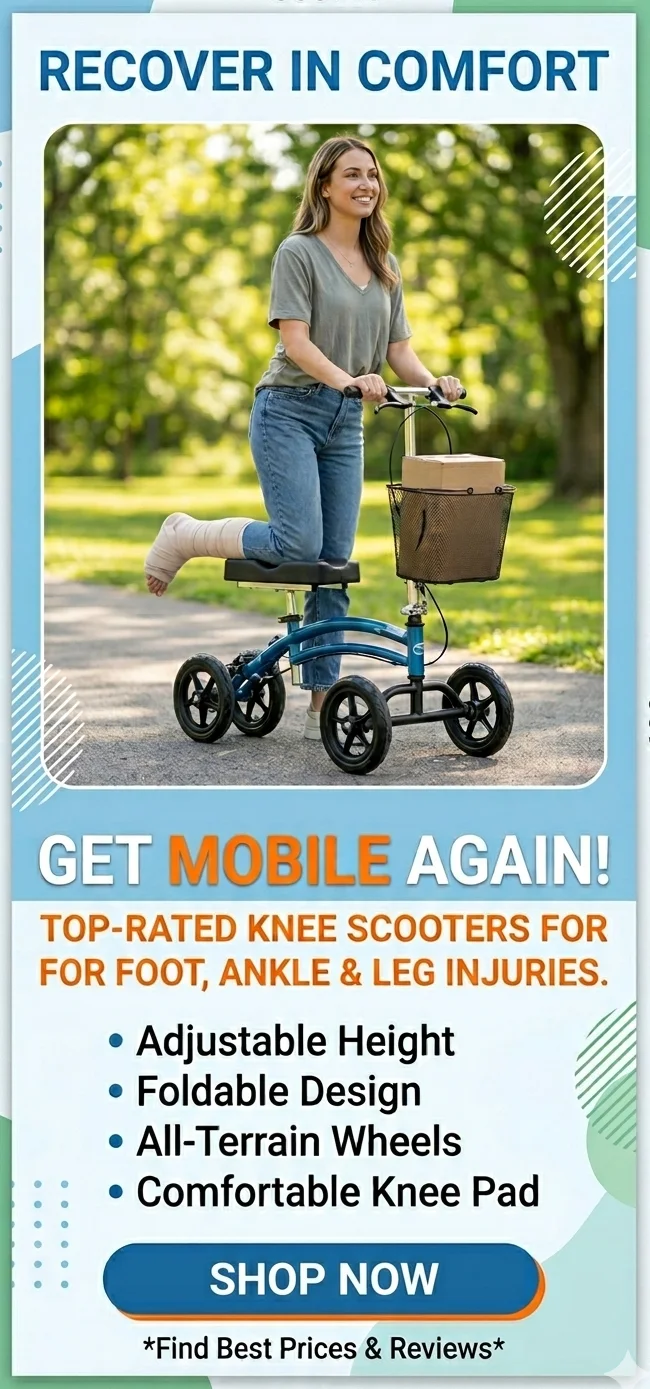
Knee scooters can be customized with the right accessories to improve comfort, add storage, and make day-to-day use easier—especially if you’re relying on your scooter for work, errands, or getting around the house. Below are the most common knee scooter accessories, what they do, and when they’re worth buying.
Knee Scooter Accessories That Actually Help
Most people don’t need every add-on. The best approach is to upgrade based on your biggest friction points: carrying items, knee discomfort, indoor/outdoor use, or staying visible and stable.
Types of Accessories:
- Storage Basket: One of the most useful add-ons. A detachable basket helps you carry essentials like your phone, wallet, keys, water bottle, small groceries, or medical supplies—without trying to balance items in your hands.
- Cup Holder: Great if you’re moving around the house or traveling. A solid cup holder lets you bring water or coffee hands-free (and reduces the “where do I set this?” problem).
- Knee Pad Cover: If you’re using your scooter for longer stretches, comfort upgrades pay off fast. A padded cover (often memory-foam style) reduces pressure points and can help prevent skin irritation from friction.
- Handlebar Grips: Helpful if your hands get sore or numb, or if you’re doing lots of turning. Better grips improve comfort and control, especially on longer days.
- LED Lights: Useful for early mornings, evenings, hallways, parking lots, and hotel corridors. Extra visibility is a simple safety upgrade if you’re ever moving in low-light situations.
- Phone Holder: Convenient for navigation, calls, music, or quick access to instructions/appointments—without digging in a pocket or basket.
- Bell or Horn: Worth it if you’ll be in crowded spaces (stores, sidewalks, events). It’s an easy way to alert people without needing to raise your voice.
- Off-road Wheels: If you’ll be outside on uneven sidewalks, gravel, grass, or rough pavement, wheel upgrades can change the entire experience. All-terrain wheels usually roll smoother and feel more stable on imperfect surfaces.
- Brake Locks: Great for stability when you’re stationary—getting in/out of a chair, opening a door, using the bathroom, or loading the scooter into a vehicle. Many scooters have brakes already; this is about making “park and stay put” more reliable.
- Backpack or Saddle Bag: A good option when you want more storage than a basket, or you need items to stay secure (travel, work, longer errands). Saddle bags can also keep weight balanced better than overloading a front basket.
Which Accessories Are Worth Buying First?
If you want the biggest improvement with the fewest purchases, start with the accessories that solve the most common daily annoyances:
- 1) Storage (basket or bag) — makes normal tasks possible without juggling items.
- 2) Comfort (knee pad cover + better grips) — helps if you’ll be on the scooter for long periods.
- 3) Safety (brake lock + lights) — especially helpful for travel, low light, or frequent stops.
- 4) Terrain upgrade (all-terrain wheels) — only if you’ll actually be outdoors on rough surfaces.
Why You Might Need These Accessories:
- Convenience: Storage baskets, bags, and cup holders keep your hands free and reduce the hassle of moving items from room to room.
- Comfort: Knee pad covers and upgraded handlebar grips can make daily use noticeably easier—especially during longer recovery periods.
- Safety: Brake locks help prevent unwanted rolling, and lights improve visibility in low-light areas like hallways, parking lots, and sidewalks.
- Versatility: Off-road wheel upgrades can make a scooter far more usable outside, depending on where you live and the surfaces you encounter.
- Personalization: Accessories let you tailor your setup to your habits—workdays, errands, travel, or just getting around the house comfortably.
With the right accessories, your knee scooter can feel less like a temporary inconvenience and more like a practical tool that helps you stay independent during recovery.
Questions & Answers About Knee Scooter Accessories and Their Uses
Q: What types of storage options are available for knee scooters?
A: Many knee scooters include a detachable basket, and you can also add handlebar bags, backpacks, or saddle bags for more secure storage—especially for travel or longer errands.
Q: Can you add a cup holder to a knee scooter?
A: Yes. Most cup holders attach to the handlebars and are a simple way to carry a drink hands-free.
Q: How can you make the knee pad more comfortable?
A: A knee pad cover (often memory-foam style) can reduce pressure points and friction, which matters a lot if you’re using the scooter for hours per day.
Q: Are there options for improving handlebar comfort on a knee scooter?
A: Upgraded grips can improve comfort and control—especially if your hands get sore during longer use or frequent turning.
Q: Can you enhance visibility on a knee scooter for low-light conditions?
A: Yes. LED lights can be attached to the handlebars or frame to improve visibility in low-light areas like hallways, parking lots, and sidewalks.
Q: Is it possible to add a phone holder to a knee scooter?
A: Yes. A phone holder on the handlebars is useful for navigation, calls, music, and quick access while you’re moving.
Q: Can you add a bell or horn to a knee scooter?
A: Yes. Bells or horns are helpful in crowded spaces so you can alert others without stopping or raising your voice.
Q: Are there wheel upgrades available for knee scooters?
A: Some models support wheel upgrades, including all-terrain wheels that roll better on uneven sidewalks, gravel, or rough pavement.
Q: Can you add brake locks to a knee scooter?
A: Many scooters include brakes, but adding or using a reliable brake lock helps keep the scooter from rolling during transfers or when parked.
Q: Why would you need accessories for a knee scooter?
A: The right accessories improve convenience (carrying items), comfort (padding/grips), safety (lights/brake lock), and versatility (terrain upgrades), making the scooter easier to live with during recovery.
Affiliate disclosure: This site may earn a commission if you purchase through links on this page, at no extra cost to you. Content is for general informational purposes and is not medical advice.