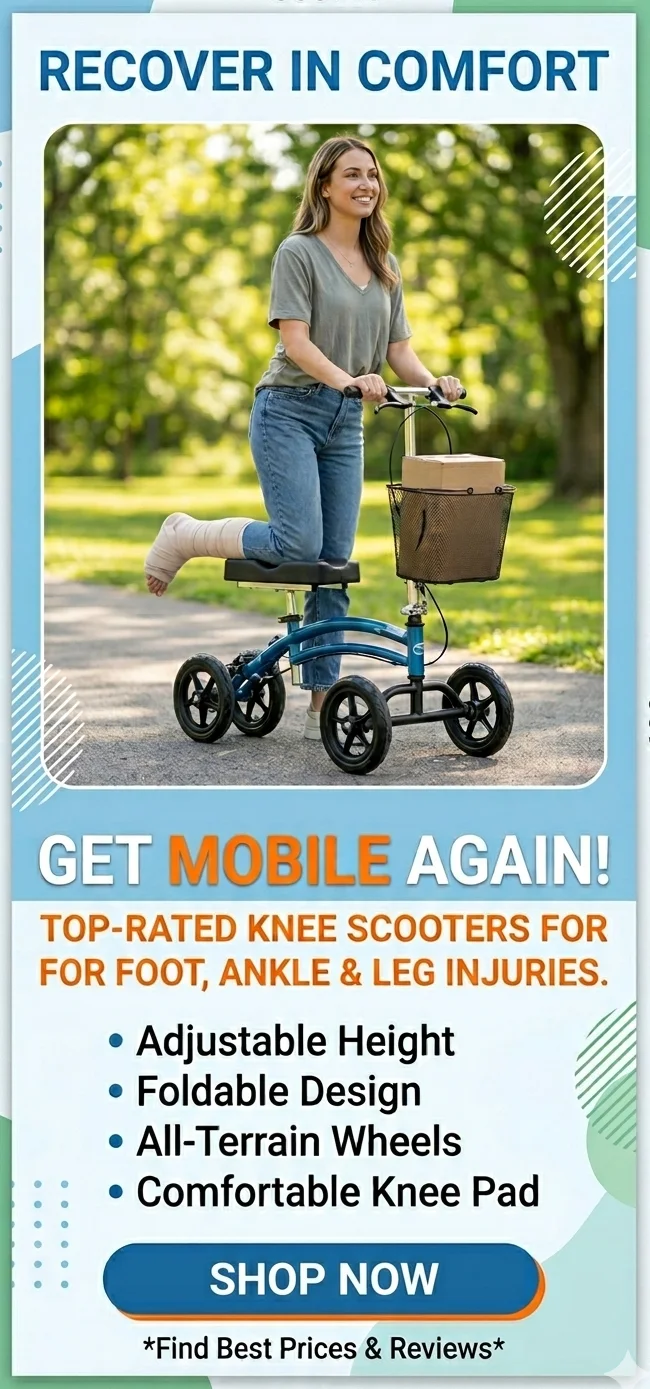
Recovering from a foot, ankle, or lower leg injury doesn’t mean you have to give up on staying active. If you’re using a knee scooter, there are several simple, low-risk ways to keep your upper body strong, maintain mobility, and protect your “good” leg from getting overworked.

Exercises You Can Do While Using a Knee Scooter
Being on a knee scooter can feel like your routine gets put on pause—especially if you’re used to staying active. The good news is you can still train, you just have to be selective. The goal during recovery is usually simple: maintain strength where you can, keep joints moving, and avoid anything that increases fall risk or puts stress through the injured side.
Before you start, set yourself up safely: choose a flat, uncluttered space, wear supportive shoes on your “good” foot, and lock the scooter brakes (or park it against a wall) anytime you’re doing seated work.
Upper Body (Seated and Stable)
Can I Still Work Out My Upper Body?
Yes—and for many people, upper body training is the easiest win during lower-leg recovery. Stick to controlled movements and lighter loads than normal, and prioritize good posture.
- Seated bicep curls (dumbbells or resistance bands)
- Seated overhead press (light weight; keep ribs down)
- Triceps extensions (one dumbbell or band)
- Seated rows with a band (anchor safely in front of you)
- Lateral raises (very light; slow tempo)
Tip: If you feel wobbly on the scooter at all, move to a sturdy chair instead. The exercise still counts—the goal is consistency and safety.
“Good” Leg Strength (Without Overdoing It)
How Can I Keep My Non-Injured Leg Strong?
Keeping your non-injured leg active is smart, but it’s also the leg doing extra work all day. That means it’s easier to overdo it. Aim for short, controlled sets and stop well before fatigue affects balance.
- Seated knee extensions (straighten the knee, squeeze the quad)
- Seated leg raises (front and side; slow and controlled)
- Calf raises while holding a counter for support (if cleared)
- Glute squeezes (seated; hold 3–5 seconds)
Safety note: If your “good” leg starts to feel shaky after a workout, that’s your signal to back off. A tired support leg increases fall risk—exactly what you don’t need during recovery.
Core Work (Low-Risk Options)
Are There Any Core Exercises I Can Do?
Definitely. Core training helps posture, reduces back tightness from hopping/compensation, and can make scooter use feel more stable. Keep it slow, and avoid anything that makes you brace so hard you hold your breath.
- Seated twists (bodyweight or a light dumbbell)
- Seated knee lifts (lift the “good” knee slightly; stay tall)
- Seated dead-bug arms (move arms only; focus on rib control)
Balance and Coordination (Only If You’re Steady)
Can I Improve My Balance and Coordination?
Yes, but treat balance work as optional—and only do it if you’re steady and cleared for it. Use a countertop, railing, or a sturdy chair back for support, and keep your practice close to something you can grab immediately.
- Supported single-leg stands (light fingertip support; 10–20 seconds)
- Head turns while holding support (gentle, slow)
- Reaching drills (reach one arm forward/side while supported)
Important: Skip balance work if you’re feeling fatigued, dizzy, or rushed. Most falls happen when people push these at the wrong time.
Stretching and Mobility (Daily Helps)
What About Stretching?
Stretching is one of the best “daily habits” during recovery—especially because sitting more can tighten hips, hamstrings, chest, and upper back. Keep the injured side comfortable and avoid any stretch that pulls on it.
- Chest/pec stretch (doorway stretch or hands clasped behind back)
- Upper back stretch (arm hug stretch)
- Hamstring stretch on the “good” leg (seated; gentle)
- Hip flexor stretch (supported; only if you can do it safely)
Simple Weekly Structure (So You Don’t Overthink It)
- 3 days/week: Upper body + core (15–30 minutes)
- 2–3 days/week: Light “good” leg work (5–15 minutes)
- Daily: 5 minutes of stretching/mobility
Conclusion
Using a knee scooter doesn’t mean putting your activity on hold—it means training smarter. Focus on safe, stable movements that keep your upper body strong, your core engaged, and your mobility from getting stiff while your injury heals. If anything increases pain, swelling, or feels unstable, stop and adjust. And if you’re unsure what’s appropriate for your specific injury, check in with your clinician or physical therapist before progressing.
Affiliate disclosure: This site may earn a commission if you purchase through links on this page, at no extra cost to you. Content is for general informational purposes and is not medical advice.